NativeWay was founded in 1942 by W. Punchibanda. We're now on the third generation of family leadership. People sometimes ask whether that's a meaningful business detail or a footnote — here's why we think it shapes the company more than people assume.
1. Time horizons compound
A third-generation owner doesn't make decisions on a five-year exit horizon. A chiller specification that lasts 25 years, a service contract that runs for two decades, a piping standard that takes a generation to embed — those are normal time horizons in a family firm. They're abnormal in firms managed for quarterly returns.
Practically, this shows up in the equipment we recommend. We will, on most projects, advise the more expensive but longer-lived option — because the family that owns this company will still be answering for that recommendation in 15 years. That's not a marketing position, it's a structural reality.
2. Apprenticeship survives
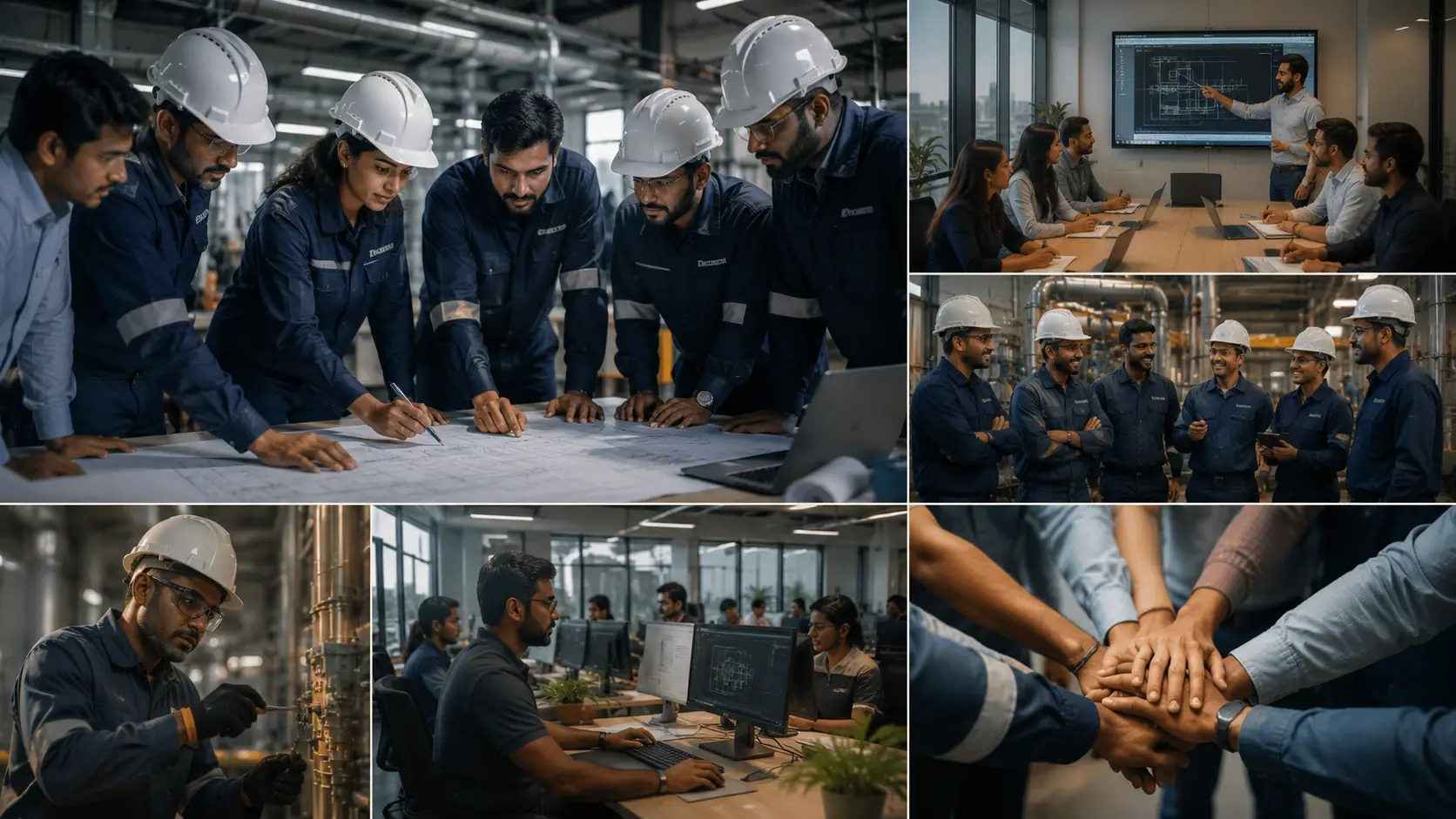
Three-quarters of our senior engineers were apprenticed inside the company. The pattern has been consistent across three generations: an engineer joins at 23, learns the trade across multiple disciplines for a decade, becomes a project lead at 35, and a senior engineer at 45. A few become directors. A handful leave to start their own firms — and we end up sub-contracting work to them, which strengthens the local ecosystem.
The downside of this model is that we hire slowly. The upside is institutional memory. When we tell you a particular Hitachi VRF model has performed well in tropical conditions, that's not a brochure claim — it's pulled from records of pumps we installed in 2008.
3. The brand is the family name
This sounds sentimental, and partly it is. But it's also operationally important. There is no anonymous CEO five layers above the engineer on your project. If something goes wrong, the people answering for it have their family name on the door. That changes the calibration of what gets shipped.
We've seen what happens when this discipline lapses. Two of our largest competitors over the last 30 years had family origins, lost them in a generational transition, and shifted into project-by-project optimisation. Both, today, have a very different reputation in the market than they did when the founders' names were on the office.
4. Risk appetite is different
A family firm with 84 years of continuity has different risk arithmetic than a firm with five-year horizons. We turn down work that we think we'll regret — projects with structurally inadequate budgets, briefs that lock us into specifications we know will fail, clients whose payment behaviour we've watched over a decade. A bid-and-build firm chasing growth quarter by quarter would take some of that work. We can't.
The cost of this is slower top-line growth. The benefit is that we've never been involved in the kind of project failure that ends companies. Eighty-four years of "boring" matters.
5. Partners can plan around us
Our brand partnerships — Hitachi, Teksan, FRAL, DOMUS, Force MTU — span from a few years to over two decades. The longest, with Hitachi, predates the current generation of ownership. Brands invest in distributor relationships when they believe the distributor will still be there in 10 years. A family firm makes that easier to predict than a private-equity-owned competitor.
What this means for the work
Practically, when we quote you for a project, three things follow from the family-firm structure:
- The project lead you meet at briefing is likely to still be at NativeWay when you return for service in five years. Engineering continuity isn't an aspiration — it's the default.
- Equipment recommendations will lean conservative. A more expensive, longer-lived option is almost always the family-firm answer.
- Service contracts are a real business line for us, not an afterthought. The economics of a 20-year service relationship matter to a firm thinking generationally.
The note we want to leave you with
None of this means a family firm is automatically better. We've all seen family firms that ossified, that promoted family over capability, that couldn't adapt. The structure helps but doesn't guarantee. What it does guarantee is a long memory, and in engineering, long memory is undervalued.
If you're shaping a project that will outlast your own tenure as facility owner, talk to firms that will outlast their own founders. We're one. Get in touch.